What Are Digital Marketing Services and Why Does Your Business Need Them?
Your customers may discover your business through Google, see your brand on social media, visit your website, compare you with competitors, read reviews, watch a video, or encounter your content through an AI-powered search experience all before they ever contact you.
That journey is exactly why digital marketing is no longer just about running ads or posting on social media.
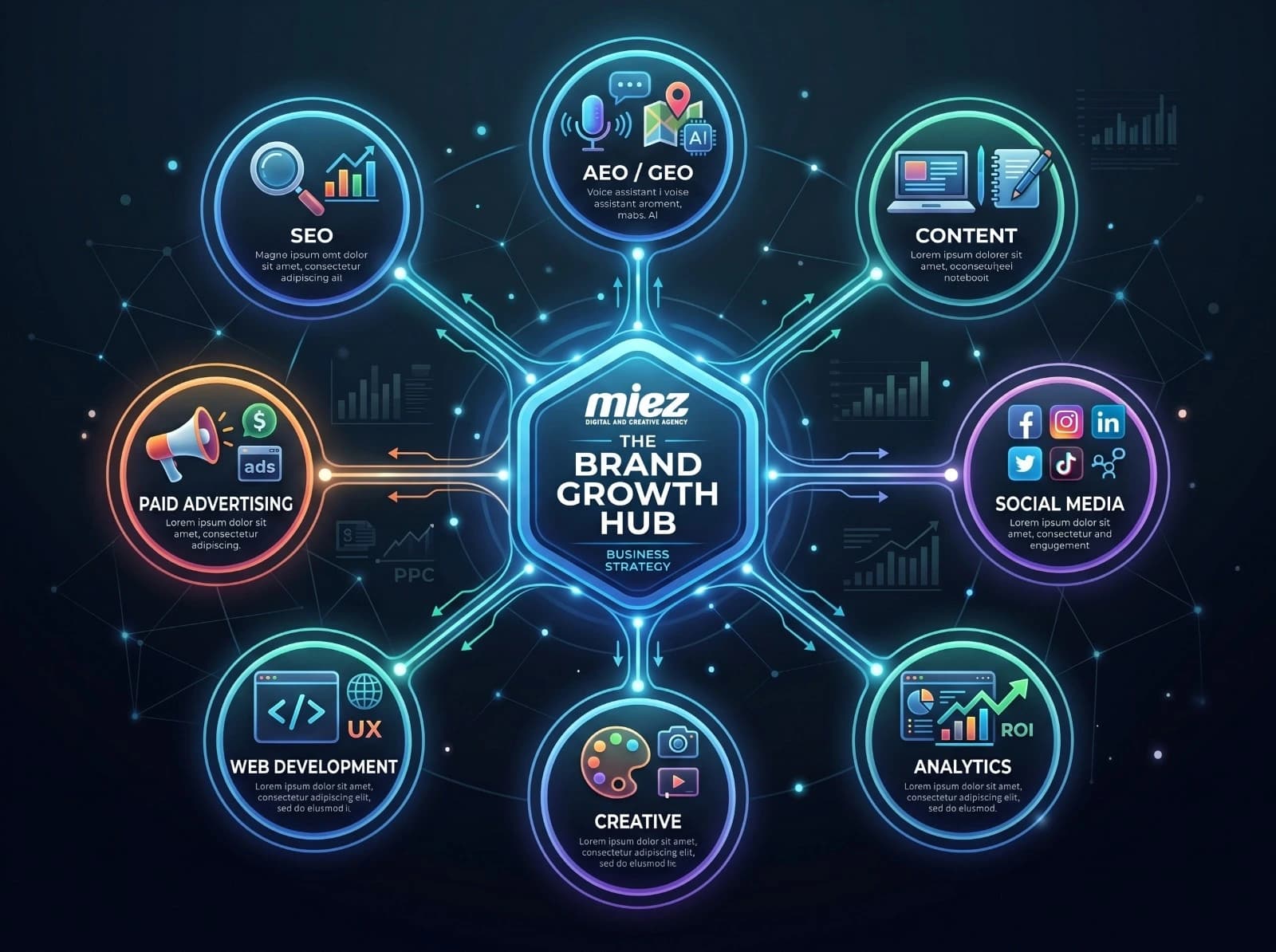
Digital marketing services bring together the channels, strategies, content, technology, and data businesses use to become discoverable online, attract the right audience, build trust, and turn attention into measurable business results.
But not every business needs the same combination of services. Understanding what each channel does and how they work together is the first step toward building a digital strategy that supports your business goals.

What Are Digital Marketing Services?
Digital marketing services are strategies and activities used to promote a business through digital channels such as search engines, websites, social media, online advertising, content, email, and emerging AI-powered discovery platforms.
They can help a business improve online visibility, reach potential customers, generate qualified leads, increase conversions, strengthen its brand, and measure marketing performance.
Common digital marketing services include:
- Search Engine Optimization (SEO)
- Answer Engine Optimization (AEO)
- Generative Engine Optimization (GEO)
- Social Media Marketing
- Performance Marketing
- Pay-Per-Click Advertising (PPC)
- Content Marketing
- Website Development and Optimization
- Video and Animation
- Graphic and Creative Content
- Email Marketing
- Analytics and Conversion Optimization
These services shouldn't operate in isolation.
For example, SEO may bring someone to your website, useful content may answer their questions, good web design may build confidence, remarketing may reconnect with them later, and conversion optimization may make it easier for them to become a customer.
That is when digital marketing becomes a connected growth strategy rather than a collection of separate marketing tasks.
Why Are Digital Marketing Services Important for Businesses?
Digital marketing helps businesses become visible where customers are already researching, comparing, and making decisions online. A business can offer an excellent product or service and still struggle to grow if the right people cannot discover it.
Consider a simple situation. A potential customer needs a service that your company provides. They search Google, compare several websites, check social media, read reviews, and research their options before contacting anyone.
If your competitors are visible throughout that journey and your business is not, they have more opportunities to earn that customer's attention. A strong digital presence helps reduce that gap.
Effective digital marketing services can help businesses:
- Increase visibility across relevant digital channels
- Reach audiences with stronger purchase intent
- Build brand awareness and credibility
- Generate qualified website traffic
- Create leads and inquiries
- Support online and offline sales
- Understand customer behavior
- Measure marketing performance
- Build long-term digital assets such as search visibility and useful content
The objective is not simply to “be online.” It is to create a digital presence that supports how real customers discover, evaluate, and choose businesses.
What Are the Main Types of Digital Marketing Services?
Different digital channels solve different business problems. Understanding their roles makes it easier to decide where your marketing investment should go.
1. Search Engine Optimization (SEO)
SEO improves a website's ability to be discovered through relevant organic searches. It can involve keyword research, technical improvements, website structure, content optimization, internal linking, authority building, and improving how search engines understand your pages.
For example, if someone is actively searching for the exact service your business provides, appearing at the right point in that search journey can bring highly relevant visitors to your website.
SEO is particularly valuable for businesses that want to build sustainable organic visibility rather than depending entirely on paid advertising.
2. Answer Engine Optimization (AEO) and Generative Engine Optimization (GEO)
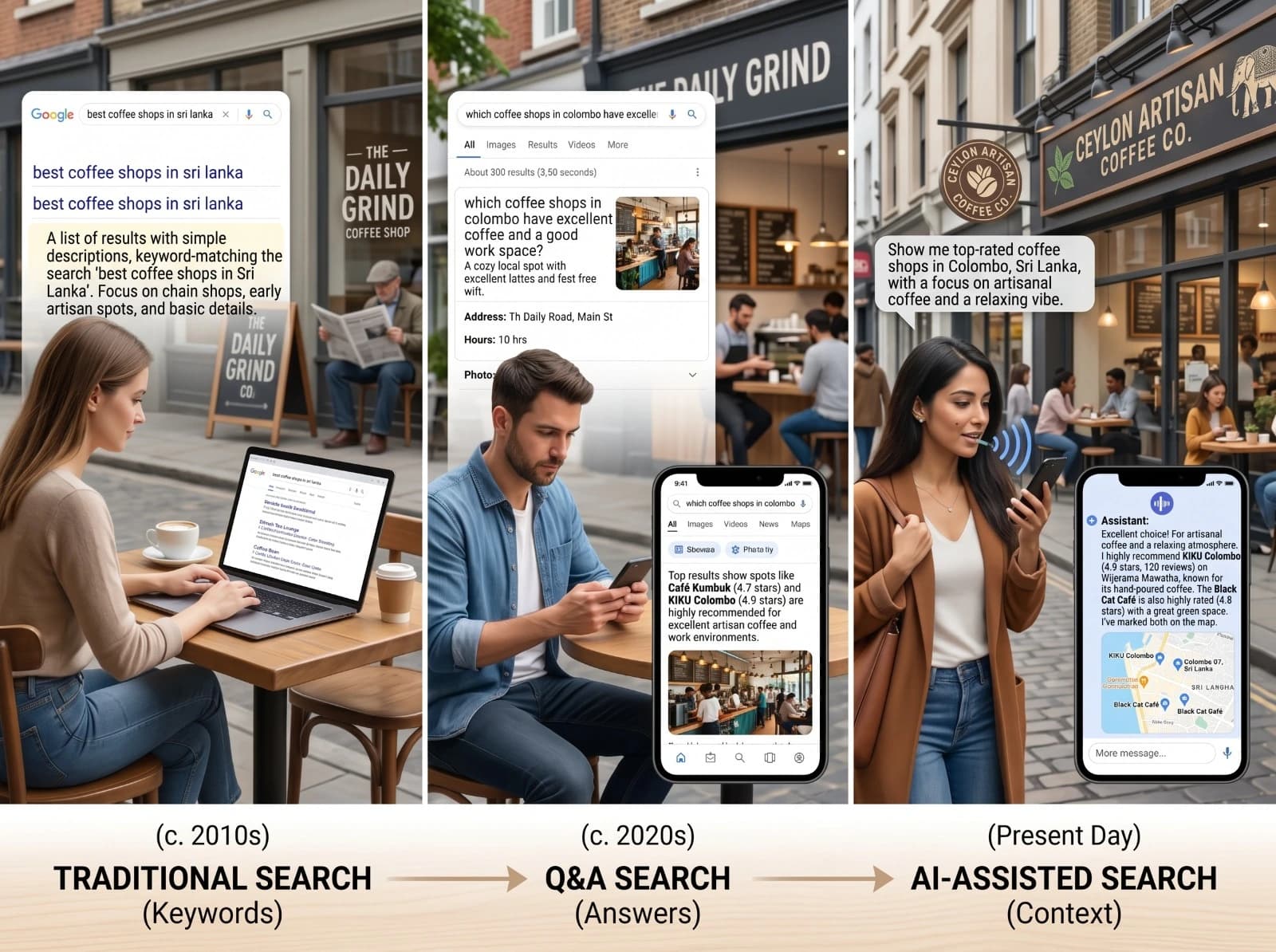
AEO and GEO focus on making useful business information clear, structured, trustworthy, and easier to understand in evolving answer-based and AI-assisted discovery environments.
People are increasingly searching in conversational ways. Instead of typing only short keywords, a potential customer may ask:
- “Which digital marketing services does a small business need?”
- “Why is my website not generating leads?”
- “What should I look for in a digital marketing agency?”
Creating clear, authoritative content around these real questions can help a business provide useful answers while strengthening its overall search presence.
AEO and GEO should complement strong SEO fundamentals rather than replace them. Clear website architecture, technically accessible pages, accurate information, useful content, brand consistency, authority, and a good user experience remain important foundations.
3. Social Media Marketing
Social media marketing helps businesses build awareness, communicate with audiences, distribute content, and create ongoing relationships around their brands.
However, effective social media marketing is more than publishing posts regularly. It requires understanding the audience, selecting appropriate platforms, creating relevant content, maintaining a consistent brand identity, monitoring performance, and connecting social activity with broader business objectives.
A B2B technology company, for example, may require a very different social strategy from a fashion retailer or restaurant.
4. Performance Marketing and Paid Advertising
Performance marketing uses paid digital channels to generate measurable actions such as leads, sales, enquiries, downloads, or website conversions. Platforms such as search and social advertising can help businesses reach audiences faster than many organic channels.
But spending more does not automatically create better results. Campaign performance can depend on targeting, creative quality, messaging, landing pages, tracking, offers, audience intent, and the overall customer journey.
Successful paid marketing therefore requires continuous measurement and optimization rather than simply launching advertisements.
5. Content Marketing
Content marketing uses useful and relevant information to attract, educate, engage, and influence potential customers. Content can include:
- Blog articles
- Guides
- Videos
- Case studies
- Infographics
- Social content
- Landing pages
- Educational resources
- Email content
Strong content answers real customer questions rather than simply talking about the company.
For example, an article explaining “How to Choose the Right Digital Marketing Services for a Small Business” can help someone who is still researching their options while introducing them naturally to the expertise behind the business.
Content also supports SEO, social media, email marketing, lead generation, and brand authority.
6. Website Development and Optimization
Your website is often where digital attention turns into business action.
A company may invest heavily in SEO, social media, or paid advertising, but if visitors arrive at a slow, confusing, outdated, or unconvincing website, marketing performance can suffer.
A strong business website should make it easy for visitors to:
- Understand what the company offers
- Find relevant information
- Navigate between important pages
- Trust the business
- Take the next step
- Contact, enquire, book, or purchase
Web development and digital marketing therefore work best when they support the same customer journey.
7. Video, Design and Creative Content
Creative content helps turn a marketing message into something people can quickly understand, recognise, and remember.
Video, animation, photography, graphics, and other visual assets can support advertising, social media, websites, product communication, and brand storytelling.
The goal should not simply be to create visually attractive content. Good creative work should communicate the right message to the right audience while remaining consistent with the brand.
Does Every Business Need the Same Digital Marketing Services?
No. The right digital marketing mix depends on the business, its customers, goals, industry, competition, budget, and current online presence. This is one of the most important principles to understand.
- A local service business may prioritise SEO, local search visibility, a conversion-focused website, social media, and targeted advertising.
- An e-commerce brand may need SEO, paid advertising, product content, remarketing, email campaigns, social media, and conversion optimization.
- A B2B company may benefit more from SEO, LinkedIn marketing, thought-leadership content, lead generation, and strong service pages.
- A new business may first need to establish its website, positioning, tracking, and core digital presence before investing heavily across multiple marketing channels.
There is no universal checklist that every company needs to follow.
“The strategy should begin with the business problem not with the marketing platform.”
How Do You Know Which Digital Marketing Services Your Business Needs?
Start with your business goals and customer journey, then choose the digital channels that can realistically support them. Before deciding where to invest, ask:
Who is your ideal customer?
Understand who you are trying to reach and what matters to them.
Where do they look for solutions?
They may search Google, use social media, ask for recommendations, watch videos, or increasingly use AI-assisted tools to research options.
What is your primary business objective?
Brand awareness, enquiries, online sales, bookings, store visits, international expansion, and customer retention require different strategies.
Where is the current gap?
A business with strong traffic but few enquiries has a different problem from a business that cannot be found online at all.
How will success be measured?
Decide which business outcomes matter before launching campaigns.
This approach prevents businesses from investing in channels simply because they are popular.
Can Digital Marketing Help Small Businesses Compete With Larger Brands?
Yes. Digital marketing can give small businesses opportunities to compete for specific audiences, searches, locations, and customer needs without requiring the reach of a large national brand.
A smaller business may not have the advertising budget of a major competitor, but it can still build visibility around highly relevant searches, specific locations, niche expertise, useful content, strong customer experiences, and carefully targeted campaigns.
For example, a small company does not necessarily need to dominate every search related to its industry. It may be more valuable to become highly visible for the specific problems it solves and the customers it serves.
That focus can make digital marketing particularly valuable for growing businesses.

How Is AI Changing Digital Marketing?
AI is changing how people search, discover information, create content, analyse data, and interact with brands, but it does not remove the need for strong marketing fundamentals.
Search behaviour is becoming more conversational, marketing platforms are introducing more automation, and businesses have access to increasingly sophisticated tools for analysis and content production.
But technology alone does not create a strong brand. Businesses still need:
- Clear positioning
- Accurate information
- Useful content
- Strong websites
- Good customer experiences
- Reliable data
- Distinctive creative work
- Trust and credibility
- A strategy built around real business goals
AI can support these activities, but using more AI tools is not a substitute for understanding customers.
For businesses, the more useful question is not “Are we using AI?” It is:
“Are we using technology in ways that improve our customers' experience and our marketing decisions?”
Should You Manage Digital Marketing In-House or Work With a Digital Marketing Agency?
Both models can work. The right choice depends on your internal expertise, resources, budget, goals, and the complexity of your marketing needs.
An internal team can provide deep day-to-day knowledge of the business and brand. However, modern digital marketing can require expertise across SEO, advertising, analytics, content, social media, design, development, video, conversion optimization, and emerging search environments.
Building all of those capabilities internally may not be practical for every business. A digital marketing agency can provide access to specialists across multiple areas while helping coordinate those activities under a broader strategy.
Some businesses also use a hybrid approach, with an internal marketing team working alongside an agency for specialist capabilities.
The important point is to choose the structure that gives your business the expertise and execution capacity it actually needs.
What Should You Look for in a Digital Marketing Agency?
A good digital marketing agency should understand your business before recommending channels, campaigns, or budgets. Before choosing an agency, consider whether it:
- Asks about your business objectives
- Tries to understand your customers
- Can explain its strategy clearly
- Uses data to guide decisions
- Connects marketing activities instead of treating them in isolation
- Provides transparent reporting
- Understands both established and emerging search environments
- Measures outcomes that matter to the business
- Avoids unrealistic promises
Be cautious when an agency immediately recommends every available service without first understanding the problem it is supposed to solve.
The role of a strong digital marketing agency is not simply to increase marketing activity. It is to help determine where digital marketing can create meaningful value.
How Do You Measure Whether Digital Marketing Is Working?
Digital marketing performance should be measured against business objectives, not vanity metrics alone. The right metrics vary depending on the strategy. They may include:
| Objective | Useful Metrics |
|---|---|
| Search visibility | Organic impressions, rankings, clicks, qualified organic traffic |
| Lead generation | Enquiries, qualified leads, calls, form submissions |
| E-commerce | Transactions, conversion rate, revenue, return on ad spend |
| Advertising | Cost per lead, cost per acquisition, conversion rate, ROAS |
| Brand awareness | Reach, branded searches, direct traffic, engagement |
| Website performance | Conversion rate, engagement, key user actions |
| Content | Relevant organic traffic, engagement, assisted conversions, leads |
A campaign can generate thousands of impressions and still fail to create meaningful business value. Likewise, a smaller amount of highly qualified traffic can sometimes produce better results than a large volume of irrelevant visitors.
The question should therefore be:
“Is our digital marketing moving the business closer to its objectives?”

How Do Digital Marketing Services Work Together?
The strongest digital strategies connect multiple channels around one customer journey rather than treating each service as a separate activity.
Imagine a potential customer discovering your business through an educational Google search. They read one of your articles. Later, they see a useful piece of content from your brand on social media. They return to your website, explore your services, compare options, and eventually submit an inquiry.
- SEO helped create discovery.
- Content provided information.
- Social media reinforced familiarity.
- The website built confidence.
- Conversion optimization made the next step easy.
- Analytics helped identify what worked.
This connected approach is where digital marketing services become significantly more valuable than isolated tactics.
Build a Digital Marketing Strategy Around Your Business Not Around Trends
New platforms, technologies, algorithms, and marketing trends will continue to appear. Your business does not need to chase every one of them.
It needs to understand where its customers are, how they make decisions, what prevents them from choosing the brand, and which digital channels can help remove those barriers.
That may involve SEO and AEO/GEO to strengthen search visibility. It may involve social media and creative content to build awareness. Performance marketing may help accelerate customer acquisition. A better website may be necessary to turn existing attention into inquiries.
For many businesses, the strongest strategy is a combination of these activities working towards the same goal.
At MIEZ, we approach digital marketing services as connected parts of a wider business strategy combining search, content, performance marketing, social media, creative, technology, web experiences, and data around what the business is actually trying to achieve.
If you are unsure which digital channels deserve your attention first, the starting point does not have to be another campaign. Start with the business goal, understand the digital gaps, and build the strategy from there.
Discuss Your Digital Marketing Goals with MIEZFrequently Asked Questions
What are the most important digital marketing services?
There is no single set of services that is most important for every business. SEO, social media marketing, paid advertising, content marketing, web development, performance marketing, and analytics can all be valuable. The right priorities depend on your audience, objectives, industry, competition, and current digital presence.
How much should a business spend on digital marketing?
There is no universal digital marketing budget that works for every company. Budget decisions should consider business goals, customer acquisition economics, competition, chosen channels, available resources, and expected returns. A strategy should be defined before simply allocating money across platforms.
Does a small business need a digital marketing agency?
Not necessarily. Some small businesses can manage selected marketing activities internally. A digital marketing agency becomes useful when the business needs specialist expertise, additional execution capacity, multiple coordinated services, or strategic support that is difficult to maintain in-house.
How long does digital marketing take to produce results?
The timeline depends on the channel and objective. Paid campaigns can begin generating traffic relatively quickly, while SEO, organic content, and authority building usually require longer-term effort. Competition, website quality, budget, existing visibility, and execution quality can all influence results.
Is social media enough for digital marketing?
Usually not. Social media can be an important marketing channel, but customers may also discover and evaluate a business through search engines, websites, advertisements, reviews, email, video, and other digital touchpoints. A broader strategy can reduce dependence on a single platform.
Is SEO still important with AI-powered search?
Yes. Strong search fundamentals remain important as search experiences evolve. Clear website structure, useful content, technical accessibility, authority, relevance, and trustworthy information help search systems understand a business and its content. AEO and GEO can complement these foundations by considering how information is structured for answer-based and generative discovery.
How do I choose the right digital marketing services for my business?
Begin with the business objective rather than the service list. Identify your ideal customers, how they discover solutions, where they encounter friction, and what action you want them to take. Then select the channels most capable of influencing that journey.